
On 8 and 9 September, the MCAS team spent two lively and engaging days with Glendale Women’s Café in Glasgow, delivering energy-saving workshops to 34 community members.
From the beginning, the sessions felt like more than just a space to share information with the people in the room. There was a strong sense that what participants learned could travel further, through conversations with family, friends and neighbours, and through the community spaces they regularly use. That wider sharing of practical knowledge became an important part of the workshops.
The sessions were focused on making energy-saving feel useful, practical and relevant to everyday life. We talked about simple ways to reduce energy use at home, how to understand energy bills, different heating systems, and how to use heating more effectively.
What really stood out was how much people shared with each other. The workshops quickly became a two-way conversation, with community members talking about what they already do at home and the challenges they face. Some shared that they use an electric drying rack instead of a tumble dryer, while others spoke about how they had dealt with mould in their homes. These conversations made the sessions feel open and relatable, with people learning not just from us, but from each other too.
The workshops were delivered in Urdu, the main language spoken by many of the women in the group. This made a real difference. People were able to ask questions more comfortably, share their own experiences, and take part in the discussion without language becoming a barrier.
Following the sessions, Glendale Women’s Café CEO Godsal shared positive feedback, saying that the group had learned a lot and that she particularly appreciated the workshop being delivered in Urdu.
There was a lot of interest in storage heaters and different types of heating systems. Interestingly, some participants did not have storage heaters in their own homes, but they still wanted to understand how they worked and how they could be set up and used properly. They explained that this knowledge could help them support friends, family members and community spaces they regularly visit where storage heaters are used. It was a good example of how the learning from the workshop could travel beyond the people in the room and be shared more widely within the community.
Energy bills were another important part of the discussion. Some participants told us that they had previously found their bills confusing and difficult to understand. After going through an example together, they said they felt much more confident about reading their own bills and understanding what the different sections mean.
By the end of the workshops, people were already talking about changes they wanted to make at home. These included switching appliances off at the plug, taking slightly shorter showers, only boiling the amount of water needed in the kettle, using heating timers instead of leaving heating on all day, draught-proofing their homes and changing bulbs to LEDs.
The feedback showed just how practical the planned changes were. Participants said they would switch off appliances and unused switches, change to LED bulbs, use heating more carefully and look for simple ways to stop heat escaping from their homes.
Some of the more detailed commitments included:
- “I will be changing radiator valves on radiators, and use draught-proofing tapes to avoid heat escaping.”
- “I will monitor heating timers instead of using it 24 hours, and put in excluders and apply energy-saving tips from the session.”
- “I will try dropping the temperature a little to save on bills yearly.”
These responses showed that participants were leaving the sessions with clear, achievable actions they felt able to try in their own homes.
One participant told us that a smart meter was being installed the following month, while another who currently uses a prepayment meter was interested in exploring whether a different meter arrangement might suit them better.
At the end of each session, everyone received a warm pack containing a hot water bottle, draught-proofing tape, an LED bulb and warm socks. These were simple, practical items that people could take home and start using straight away.
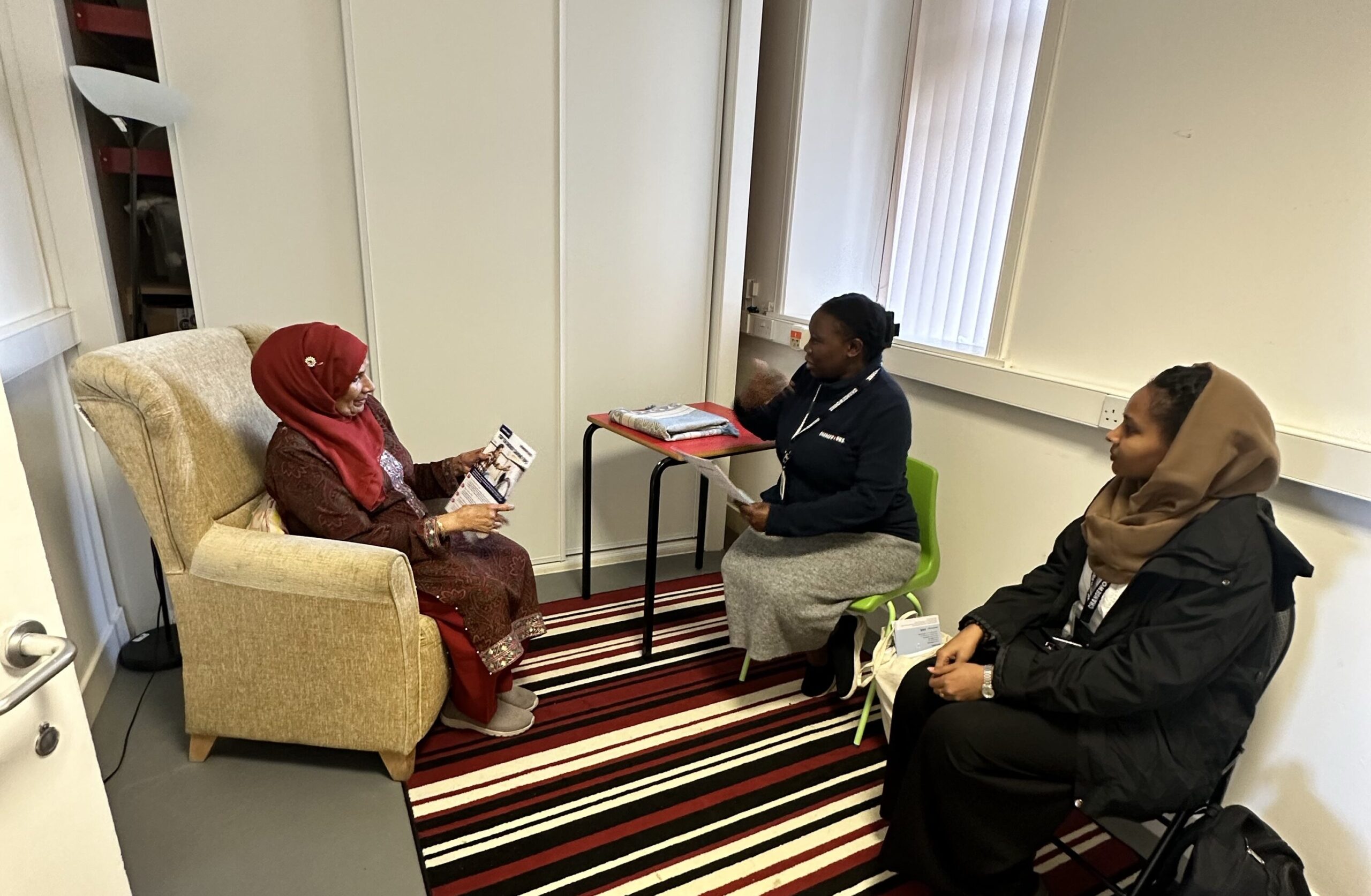
We also knew that some people might have questions they would not feel comfortable asking in front of the whole group. After the workshops, MCAS Energy Officer Abhinav, along with Changeworks’ Low Carbon Officers Valery and Roaa, stayed behind to offer 1-2-1 support, giving participants the chance to talk privately about their own situations and ask for more specific advice.
This one-to-one support also helped us resolve some very practical issues. One participant explained that, because of their age, they were struggling to read their meter themselves. We were able to explain the Priority Services Register and let them know that, if they are eligible and registered, their energy supplier may be able to arrange support with meter readings. For the participant, this was a simple but important piece of information that could make managing their energy account much easier.
What stayed with us most was the feeling that people were leaving with something they could genuinely use. Not just information, but more confidence to ask questions, understand their bills, think differently about their heating, and try small changes at home.
For us, the sessions reminded us that sometimes the most meaningful change starts with something very simple, a question answered clearly, a tip that feels achievable, or someone leaving the room thinking, ‘Hey, I can try that at home.’


